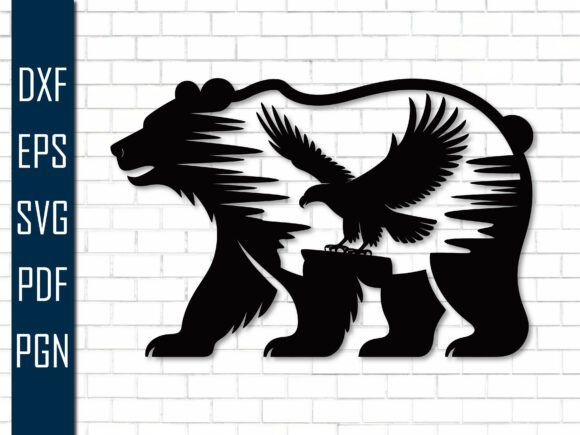
Wildlife Grizzly Bear Eagle Metal Sign
A Designer’s First Look: Bold, Rustic, and Ready for Real Stitching
When I opened the Wildlife Grizzly Bear Eagle Metal Sign file, my first thought wasn’t “cute” or “trendy”—it was “this has presence.” The composition leans into that classic metal-sign aesthetic: strong silhouettes, clean negative space, and a balanced interplay between the grizzly bear and eagle—two powerful North American icons sharing visual weight without competing. There’s no clutter, no unnecessary filigree, and no overworked detail that would vanish under dense fill stitch. As a machine embroidery design, it reads instantly at 3–4 inches wide—ideal for tote bag centers, sweatshirt backs, or pillow covers where clarity matters more than complexity.
Where This Design Earns Its Keep (and Where It Doesn’t)
I tested the Wildlife Grizzly Bear Eagle Metal Sign on three real projects: a heavyweight cotton canvas tote, a midweight fleece-lined baby blanket, and a structured twill baseball cap. On the tote? Stellar. The bold outlines held crisp edges with satin stitch borders, and the open areas stitched cleanly with moderate fill stitch density—no puckering, no thread breaks. On the baby blanket? Solid—but only with tear-away + cutaway stabilizer combo. The design’s scale and spacing gave the soft fabric room to breathe without looking lost.
The cap was the reality check. Curved surfaces exposed subtle tight corners in the eagle’s wingtip and the bear’s shoulder contour. Those areas needed a slight digitizing tweak—shorter satin stitch runs, slightly reduced density—to avoid stiffness or shadowing. That’s not a flaw in the Wildlife Grizzly Bear Eagle Metal Sign; it’s standard for any graphic-based embroidery file meant for multiple platforms (Cricut, Silhouette, laser cutting). But as an embroidery file, it assumes you’ll adapt—not just auto-load.
Fabric & Function: Know When to Lean In—or Step Back
This design thrives on stable, medium-to-heavy fabrics: denim aprons, tea towels, canvas backpacks, and structured nursery pillows. It’s less forgiving on thin knits, stretchy jersey, or lightweight linen—especially if you’re stitching large versions. Why? Because the visual strength comes from contrast and definition, not subtlety. On dark fabric, use bright white or metallic thread for maximum impact; on light fabric, deep charcoal or forest green grounds the wildlife theme without fading into background noise.
Small hoop sizes (under 4×4") will require cropping or simplification—particularly if you want to include custom name personalization (a common ask for baby items or wedding gifts). The original layout assumes breathing room. Don’t force it into a tiny hoop unless you’re willing to edit outlines or reduce detail manually. And skip it entirely for ultra-fine baby onesies or delicate silk scarves—this is a handmade product with attitude, not whisper-soft minimalism.
What Buyers Actually Notice (and Why It Matters)
As an Etsy seller and craft fair vendor, I pay attention to what makes customers pause, point, and say, “That’s mine.” The Wildlife Grizzly Bear Eagle Metal Sign delivers that instinctive recognition. It reads as *crafted*, not clip-art—even before stitching. That perception lifts perceived value: a $28 embroidered pillow cover feels like a boutique item, not a craft-store afterthought. It also reinforces brand consistency for small shop owners who lean into rustic, nature-inspired, or heritage Americana themes.
But here’s the quiet truth: this design doesn’t sell itself on novelty. It sells on authenticity and execution. A poorly stabilized version on a waffle-knit kitchen towel will look muddy. A rushed test run on black terry cloth with low-contrast thread will read as “just a shape,” not a statement. Your customer trusts your eye—and your process—not just the file.
Practical Notes Every Embroidery Designer Should Run Through
- Always test on scrap fabric first—especially if using textured weaves or layered garments like hoodies.
- Check thread color contrast in natural light *and* under warm indoor lighting. Metallic or heathered threads can shift dramatically.
- Review stitch density before scaling up. If fill areas feel overly heavy at 5", they’ll pucker at 7". Adjust density, don’t just enlarge.
- Confirm hoop size compatibility with your most-used machines—and note whether the design fits comfortably within standard commercial hoops (e.g., 5×7" or larger).
- Inspect small details like claw tips or feather edges. If they’re under 0.8mm wide in the vector file, they may not translate cleanly to satin stitch.
- Test black-and-white mockups to assess silhouette strength—this design relies heavily on shape, not shading.
- Compare light/dark fabric backgrounds side-by-side. Some thread combos flatter one but disappear on the other.
- Use appropriate stabilizer: cutaway for knits, tear-away for stable wovens, fusible + tear-away for caps.
- Verify licensing before selling finished products or bundling the Wildlife Grizzly Bear Eagle Metal Sign as part of a digital embroidery file pack. Since it’s listed under Crafts and Graphics, assume commercial use is permitted—but always double-check source terms.
Final Thought: A Workhorse, Not a Gimmick
The Wildlife Grizzly Bear Eagle Metal Sign isn’t flashy. It won’t go viral for its innovation—but it will earn repeat orders from customers who want timeless, confident, nature-rooted style. It fits naturally into holiday embroidery (think cabin-themed Christmas stockings), personalized gifts (family name added below the bear), and small business merchandise (brewery aprons, outdoor guide service patches). As a digital embroidery file, it’s a reliable anchor—versatile enough for applique design or standalone fill-stitch execution, sturdy enough for commercial embroidery volume, and distinct enough to hold its own in a crowded Etsy search for “wildlife embroidery.” Just remember: great design meets great execution. Let this one do the heavy lifting—then back it up with smart stitching choices.