Minimal Poppy Flowers Line Art Graphics for Crafts
A First Impression That Sets the Editorial Tone
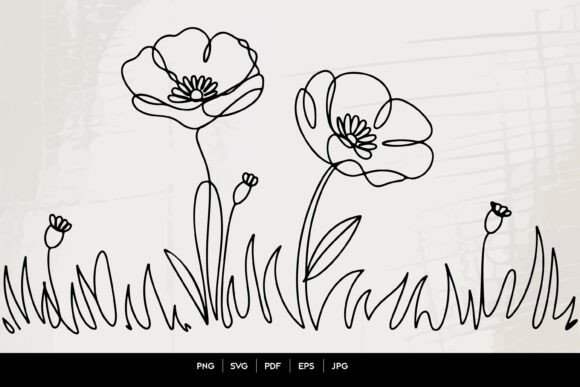
When I opened the Minimal Poppy Flowers Line Art Design file bundle, my immediate reaction was relief—this isn’t another overworked floral motif. It’s clean, intentional, and quietly confident. The single-line contour of each poppy carries botanical accuracy without clutter: subtle curves at the petal tips, a gentle taper in the stem, just enough negative space to breathe. As a blog designer who’s spent years refining visual language for content-first websites, I knew this asset would land softly but memorably—evoking spring meadows, quiet gardens, and mindful moments without shouting. It reads as modern design with a whisper of vintage botanical illustration, making it ideal for lifestyle blogs, wellness newsletters, nature educators, and small business branding rooted in authenticity.
Where This Graphic Design Asset Earns Its Place in Real Publishing Workflows
I tested Minimal Poppy Flowers Line Art Design across six live publishing touchpoints—and it delivered every time. For blog featured images, I layered it over soft oatmeal or muted sage backgrounds; the contrast was crisp but never harsh. On Pinterest pins, its simplicity scaled beautifully—even at 600px width, the poppy retained legibility and charm. As article headers inside editorial layouts, it anchored text without competing. In digital guides and lead magnets, I used it as a subtle watermark behind light-colored text boxes—adding warmth without sacrificing readability. As a Canva template accent, it elevated freebie worksheets and printable designs instantly. And for newsletter banners? Paired with a clean sans serif headline, it communicated seasonal freshness in under two seconds.
How It Strengthens Content Performance—Beyond Aesthetics
This isn’t just decoration—it’s functional editorial design. Minimal Poppy Flowers Line Art Design improves visual hierarchy by guiding the eye naturally toward headlines or CTAs. Its consistent line weight and organic rhythm reinforce brand identity across disparate content types: a summer-themed affiliate marketing post feels cohesive next to a botanical eBook cover or a downloadable garden planner. Readers subconsciously register that level of care as trustworthiness—especially important for online educators and health-focused publishers. In category thumbnails, it signals “nature,” “seasonal,” or “mindful” faster than text alone. And because it avoids clichéd realism or heavy shading, it supports stronger click-through potential on social media previews where clarity wins.
Best Use Cases (Where It Shines)
- Blog graphics for spring/summer content series
- Pinterest pin accents that stand out in crowded feeds
- Website header elements for gardening, wellness, or slow-living sites
- Digital product covers—eBook, digital guide, printable design
- Newsletter headers that feel personal but polished
- Content upgrades like checklists or seasonal planners
- Social media graphics for Instagram carousels or Facebook banners
Use With Intention (Where Caution Applies)
While versatile, Minimal Poppy Flowers Line Art Design isn’t universal. Avoid placing it directly over busy photo backgrounds or low-contrast gradients—it needs breathing room. Skip tiny mobile thumbnails (<200px wide) unless you’re using only the central bloom shape. It’s less effective in text-dense blog graphics where fine linework could blur. And while elegant, it doesn’t carry authority in strictly corporate, legal, or finance niches—save it for creative marketplace contexts where warmth and humanity matter more than austerity.
Practical Publisher Notes You’ll Actually Use
Before deploying Minimal Poppy Flowers Line Art Design, run these checks: preview it inside your actual blog layout—not just as a standalone file. Test how it pairs with your body font (serif, sans serif, script), especially at headline sizes. Try converting it to grayscale: does the line integrity hold? Check contrast ratios against your background colors using browser dev tools. Load it into Canva and simulate how it renders on mobile preview—some SVGs behave differently across platforms. Confirm the commercial license covers monetized use: yes, this digital download permits affiliate marketing, paid digital products, and small business branding—but always verify the original source’s terms. Finally, compress PNGs for web performance (aim for under 150KB) and serve SVGs natively where supported.
Why This Belongs in Your Design Assets Toolkit
In a world saturated with AI-generated florals and overdesigned stock vectors, Minimal Poppy Flowers Line Art Design stands out by doing less—better. It’s not flashy, but it’s reliable. Not trendy, but timeless. As a graphic design asset, it bridges editorial quality and web design practicality: lightweight files, format flexibility (PNG, SVG, EPS, PDF, JPG), and mood-aligned versatility. Whether you’re building a seasonal content calendar, launching a digital guide on wildflower foraging, or designing a Canva template pack for creative entrepreneurs, this asset adds cohesion without effort. It supports content marketing that feels human, not algorithmic—and that’s exactly what today’s readers reward with attention, shares, and trust.