Arabic Geometric Mandala Graphics for Crafts
First Impression: Elegant, Intentional, Deeply Rooted
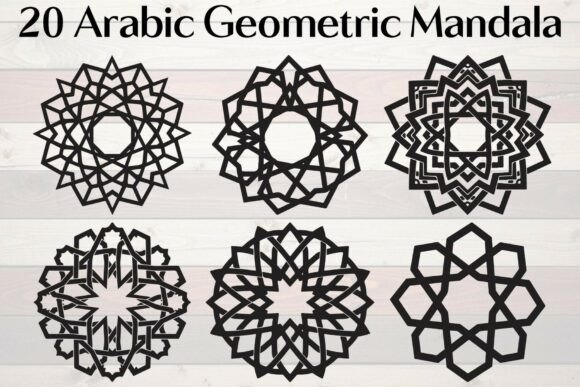
When I opened the Arabic Geometric Mandala bundle for a recent project—designing branding and packaging for a small-batch olive oil producer in Tucson—I felt immediate resonance. These aren’t trendy clipart motifs; they’re 20 rigorously composed circular patterns grounded in centuries-old Islamic geometric tradition. The mood is quiet confidence: sophisticated but never cold, structured yet warm, precise without feeling sterile. For local businesses—especially handmade soap makers, ceramic studios, spice merchants, or artisanal tea brands—this graphic design asset signals craftsmanship, authenticity, and thoughtful detail. It reads as premium *and* human-scaled—not mass-produced, not overly ornate, but deeply intentional.
Where It Strengthens Real Small Business Branding
In practice, Arabic Geometric Mandala works powerfully across touchpoints where local businesses need clarity *and* character. On product labels, a single mandala element used as a subtle border or corner accent adds instant visual hierarchy—guiding the eye to origin story, harvest date, or small-batch number without shouting. For packaging design, it elevates kraft boxes, linen pouches, or matte glass bottles by anchoring them in cultural richness while staying modern. I used one of the smaller-scale patterns as a repeating background on hang tags for a candle brand—softened at 15% opacity—and customers consistently mentioned how “thoughtful” and “special” the unboxing felt.
It also shines in promotional contexts: hero graphics for Instagram carousels, printable inserts for subscription boxes, seasonal campaign banners (think Eid, Ramadan, or even summer solstice collections), and even business cards where a cropped mandala fragment becomes a tactile, memorable focal point. As a graphic design asset, it supports stronger first impressions, improves shelf appeal against generic competitors, and builds customer trust through visual consistency—especially when paired with hand-drawn typography or natural material photography.
Smart Applications Across Local Business Touchpoints
This isn’t just decorative—it’s functional. Arabic Geometric Mandala excels where visual rhythm and symbolic weight matter:
- Product labels: As a frame, watermark, or foil-stamped motif on food or skincare packaging
- Packaging accents: Embossed on paper bands, debossed on wooden crates, or laser-etched onto ceramic jars
- Hero graphics: Full-bleed backgrounds for website banners or pop-up shop signage
- Decorative brand elements: Repeating borders on thank-you cards, recipe cards, or seasonal postcards
- Social media graphics: Layered behind product photos or animated subtly in Reels thumbnails
- Printable design: For boutique owners offering branded stationery or workshop handouts
Where to Use Arabic Geometric Mandala With Care
Like any strong design asset, its power lies in context. Avoid using Arabic Geometric Mandala in spaces demanding absolute minimalism—luxury skincare brands built on stark monochrome, for example, may find it visually heavy. It’s also less effective on very small labels (under 1.5" width) where intricate lines blur, or in ingredient-heavy layouts where pattern competes with critical regulatory text. Steer clear on low-contrast backgrounds (e.g., light grey on off-white), and avoid pairing it with overly busy fonts or competing illustrations. If your brand voice leans rustic-farmhouse or playful-kid-focused, test it alongside serif and script fonts first—it reads most naturally with clean sans serifs or refined display type, not handwritten or bubbly styles.
Practical Brand Designer Notes You’ll Actually Use
Before locking in Arabic Geometric Mandala for client work or your own small business branding, run these checks:
- Test it on real packaging mockups—not just digital previews—to assess scale, balance, and print fidelity
- Check black-and-white usage: does the pattern retain legibility and texture when converted?
- Preview it on small labels and stickers at actual size—some details vanish below 0.75"
- Test it with your brand colors: does it harmonize with earthy tones, jewel tones, or muted pastels?
- Compare it beside competitor packaging—does it stand out *meaningfully*, not just busily?
- Verify print quality: inspect SVG scalability and PNG transparency—no fuzzy edges or stray pixels
- Try it beside serif, sans serif, script, and display fonts to confirm typographic harmony
- Confirm commercial licensing covers physical product sales, social media ads, and client deliverables—don’t assume
Why This Matters for Local & Handmade Businesses
For a florist launching a wedding collection, Arabic Geometric Mandala adds ceremonial elegance without cliché. For a children’s book illustrator selling printable wall art, it offers culturally rich, gender-neutral design assets that parents recognize as meaningful—not just pretty. In food labeling, it quietly communicates heritage, care, and attention to craft—qualities that justify premium pricing and build loyalty. Unlike generic Canva templates or overused stock illustration, this bundle delivers editorial-grade visual language rooted in real tradition, making it ideal for creative entrepreneurs who value authenticity over algorithmic trends.
Ultimately, Arabic Geometric Mandala isn’t about adding decoration—it’s about deepening narrative. When used intentionally within small business branding, packaging design, or marketing visuals, it transforms functional items into cultural artifacts. That’s how local businesses earn repeat customers, spark word-of-mouth, and build identity that lasts beyond the season. Whether you're sourcing design assets for a new candle line or refreshing your handmade business’ entire visual system, this is the kind of graphic design asset that earns its place—not as filler, but as foundation.