Abstract Seamless Pattern for Background: Graphics & Patterns
As a graphic designer who’s built brand identities for handmade ceramics studios, seasonal Etsy shops, and local wellness retreats, I recently evaluated the Abstract Seamless Pattern for Background while developing a visual concept for a small-batch botanical tea brand launching its spring collection. The goal? A cohesive, tactile-feeling aesthetic that balances modern minimalism with subtle artistry—no stock clichés, no overused florals. This pattern immediately stood out—not as filler, but as a quiet design anchor.
A First Impression That Sets the Tone
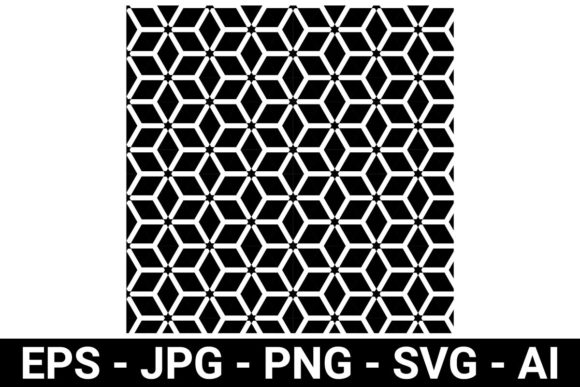
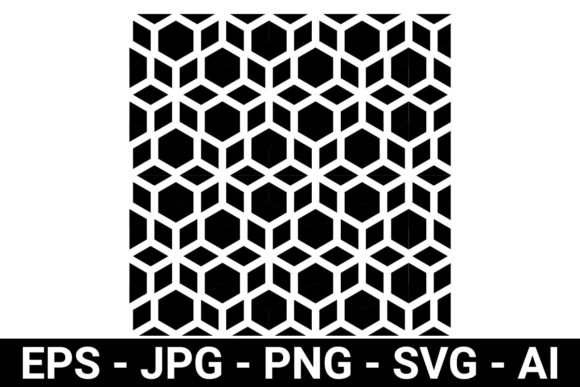
Opening the ZIP folder, I was struck by how cleanly the Abstract Seamless Pattern for Background renders across formats—especially the AI and SVG files, which scale flawlessly from business card size to wall mural mockups. Visually, it’s a study in controlled rhythm: interlocking hexagons arranged with geometric precision, softened by delicate line weight variation and balanced negative space. It reads as art deco meets contemporary simplicity—not retro pastiche, but a refined nod to symmetry and craft. The monochrome palette (true black/white, no gray bleed) gives it versatility without sacrificing character. It doesn’t shout; it settles in—and that’s exactly what many small business branding projects need.
Where It Elevates Real Client Work
In practice, this pattern shines where texture and intention matter most:
- Packaging design: Wrapped around kraft tea tins or printed on recycled paper labels, it adds quiet luxury without overwhelming product photography.
- Social media graphics: As a subtle background layer behind bold sans-serif headlines on Instagram posts or Pinterest pins, it boosts visual cohesion across a campaign.
- Printable design & digital product: Used in Canva templates for planners or wedding stationery bundles, its seamless tile ensures clean repeats across pages—no visible seams at print resolution.
- Cricut project & sublimation design: The SVG and EPS files cut precisely on vinyl; the PNG with transparency works flawlessly for mug or tote bag mockups.
- Brand identity systems: Paired with a restrained serif or warm handwritten font, it becomes part of a larger visual language—not just decoration, but a supporting element of tone.
It also performs exceptionally well in product mockups: applied to fabric swatches, ceramic glaze previews, or notebook covers, it conveys craftsmanship and attention to detail. For print-on-demand sellers or Etsy product listings, that perceived quality directly impacts conversion.
Where to Proceed With Intention
This isn’t a universal backdrop. Its strength lies in restraint—so use it thoughtfully:
- Avoid pairing it with crowded layouts or dense typography—it needs breathing room to read as intentional, not chaotic.
- Don’t force it into minimalist corporate branding (think law firms or fintech dashboards); its artistic geometry reads more “creative marketplace” than “boardroom.”
- On very small applications—like favicon-sized icons or tiny sticker designs—the hexagonal structure can blur or lose definition. Always preview at actual output size.
- With low-contrast color schemes (e.g., light gray on off-white), test legibility rigorously—its monochrome base means contrast is your responsibility.
Design Judgment in Action: What I Tested Before Approving It
Before clearing the Abstract Seamless Pattern for Background for the tea brand’s launch, I ran these real-world checks:
- Black-and-white test: Printed it solo on uncoated paper—confirmed crisp edges, no halftone artifacts, and strong tonal separation.
- Background contrast check: Placed it over light cream, deep charcoal, and soft sage—verified readability of overlaid text in each scenario.
- Scale responsiveness: Zoomed from 25% to 300% in Illustrator—no pixelation, no vector distortion in AI/SVG.
- Mockup realism: Applied it to 3D bottle and box mockups; adjusted opacity (15–25%) to ensure product imagery remained dominant.
- Font compatibility: Layered it beneath serif (Playfair Display), sans-serif (Inter), script (Caveat), and display (Bebas Neue)—each created distinct moods, proving its adaptability.
- Licensing verification: Confirmed commercial license covers client deliverables, resale items (e.g., branded merch), and digital products—no attribution required.
Why It Fits the Creative Professional’s Workflow
This isn’t just another graphic design asset; it’s a versatile, production-ready tool for designers who juggle tight deadlines and high expectations. Whether you’re building a handmade business identity, prepping assets for a print-on-demand catalog, or crafting marketing visuals for a boutique event, the Abstract Seamless Pattern for Background delivers consistency without compromise. Its file suite—AI, EPS, SVG, JPG, PNG—means no format friction across Adobe Suite, Figma, Canva, Cricut Design Space, or web CMS platforms.
Most importantly, it supports visual hierarchy. Unlike busy photorealistic textures or trend-chasing gradients, this pattern recedes respectfully—enhancing, not competing. That builds visual trust: clients see polish, audiences feel intention, and your work communicates care at every scale.
Final Verdict for Real Projects
For the botanical tea brand, we used the pattern at 18% opacity behind ingredient callouts on packaging, full-bleed on limited-edition poster prints, and scaled down as a subtle border on thank-you cards. It unified the collection without repeating the same motif everywhere—a hallmark of thoughtful creative design.
If you’re sourcing design assets for client work, prioritize those that behave predictably, scale cleanly, and support your storytelling—not distract from it. The Abstract Seamless Pattern for Background does exactly that. It’s not flashy. It’s functional, elegant, and quietly confident—exactly what strong small business branding and commercial design require.