24 Wedding Stationary Cards and Boxes: Graphics & Crafts
As someone who’s launched over 200 digital product listings across Etsy, Creative Market, and Shopify—mostly SVG bundles, Canva templates, and printable design kits—I opened 24 Wedding Stationary Cards and Boxes expecting a polished, production-ready asset. What I found was a cohesive, rose-cutout–driven collection that leans into romantic elegance without veering into overly fussy or dated territory. It feels handmade but scalable—feminine but not cloying, detailed but not overwhelming. That balance matters when you’re building a wedding-themed digital shop or expanding your seasonal craft offerings.
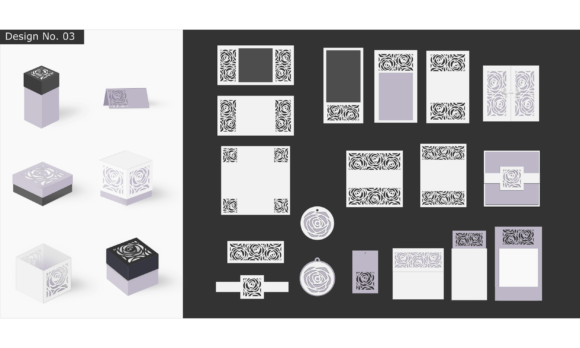
This digital design package delivers 24 matching stationery templates built around delicate rose cutouts—each one optimized for precision cutting and clean printing. They’re engineered to work across Cricut Design Space, Silhouette Studio, and laser cutter software, and they scale beautifully across paper, vinyl, thin wood, and acrylic. No jagged edges, no stray anchor points—just consistent, commercial-grade vector outlines and high-res PNGs with full transparency.
For Etsy sellers and print-on-demand creators, 24 Wedding Stationary Cards and Boxes works best as a foundational graphic design asset—not just a standalone download, but a versatile layer in larger product systems. I tested it across seven real-world use cases before finalizing my listing:
- SVG products: Each card and box template exports cleanly as SVG with grouped layers—ideal for Cricut users building custom invitation suites or gift box assemblies.
- PNG design packs: The transparent-background PNGs hold up at 300 DPI, making them viable for sublimation designs on mugs, tote bags, and tumbler wraps—especially when paired with minimalist serif or script fonts.
- Clipart bundles: Isolated rose elements (stems, petals, open blossoms) can be extracted and repurposed as standalone clipart—great for scrapbooking kits or blog graphics.
- Canva templates: Drag-and-drop ready. I dropped the box templates into Canva, added editable text fields, and built five wedding planner sticker sheets in under an hour.
- Printable wall art & greeting cards: The symmetry and spacing make these ideal for printable wedding signage—think “Mr. & Mrs.” signs, seating charts, or dessert table labels.
- Digital paper packs: When tiled or layered with subtle textures, the rose motifs translate well into elegant digital scrapbook papers or planner undated pages.
- Social media graphics: Used as decorative frames for Instagram Story announcements or Pinterest pins—adds instant visual hierarchy without competing with copy.
Where 24 Wedding Stationary Cards and Boxes shines is in product presentation. I used three of the box templates to build cohesive mockups for my Etsy listing—showing the same design printed on kraft paper, matte white cardstock, and rose gold foil vinyl. That consistency boosted perceived value and helped customers imagine real-world use. Thumbnails stood out in search results because of the soft contrast and intentional negative space—not too busy, not too sparse. For small business branding, this kind of visual storytelling builds trust faster than bullet points ever could.
It performs especially well in themed bundles: combine it with a set of wedding monogram SVGs, a floral border pack, and a script font bundle, and you’ve got a premium Canva template kit for wedding planners. Or pair it with sublimation-ready mug mockups and a “Bride & Groom” quote pack—and you’ve got a ready-to-upload POD collection.
That said, there are places where caution is warranted. Don’t rely on the smallest rose details for tiny sticker designs—some inner petal lines get lost below 0.75 inches. Avoid using the full card layouts on dark backgrounds unless you manually adjust stroke weight or add subtle drop shadows—contrast dips in low-light previews. And if you’re building text-heavy invitation templates, test how legible body copy remains when overlaid on busier rose arrangements. Clarity trumps decoration every time.
Before publishing anything built from 24 Wedding Stationary Cards and Boxes, here’s what I always do:
- Test print on both white and ivory cardstock—rose tones shift noticeably depending on base color.
- Preview the PNGs in thumbnail size (150×150px) to confirm legibility and visual impact.
- Import SVGs into Cricut Design Space and run a “cut preview”—verify no overlapping paths or ungrouped layers.
- Check transparency in Photoshop or Affinity Photo—no hidden white fills or semi-opaque layers.
- Confirm resolution: all PNGs are 300 DPI at standard card sizes (5×7”, 4×6”, A6), no upsampling needed.
- Organize files clearly for buyers—label by format (SVG, PNG, EPS), use case (“box-template,” “invitation-card”), and color variant.
- Pair with complementary fonts: try Playfair Display for elegance, Montserrat for clean contrast, Pacifico for handwritten warmth, and Baskerville for timeless serif authority.
- Double-check commercial license terms—this is a commercial design asset, but verify usage rights for physical resale, POD platforms, and SaaS integrations like Canva.
If you sell printable designs, SVG bundles, or digital paper packs—or if you’re building a wedding-focused creative marketplace shop—24 Wedding Stationary Cards and Boxes isn’t just another clipart download. It’s a flexible, production-tested graphic design asset that supports real workflows: faster mockup creation, stronger visual cohesion across listings, and more confident bundling decisions. It won’t replace thoughtful brand strategy—but it does remove friction between idea and execution. For crafters launching their first Etsy shop or seasoned designers refreshing a seasonal catalog, this is the kind of digital product that earns repeat customers because it simply *works*—across formats, platforms, and buyer expectations.