20 Moorish Window Designs: Graphics & Coloring Pages Amp
First Impressions: When Ornament Meets Intention
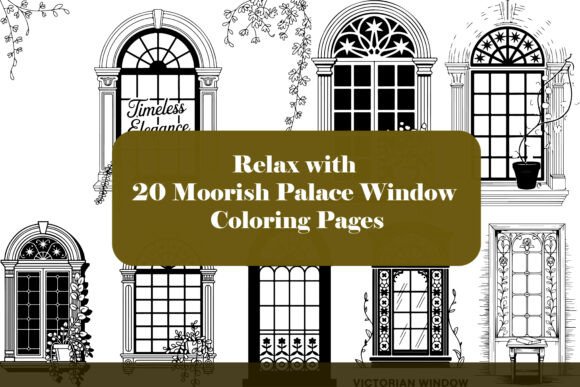
As a designer who’s built brand identities for handmade ceramics studios, launched seasonal Etsy collections, and art-directed packaging for indie tea brands, I opened 20 Moorish Window Designs expecting decorative flair—but what stood out immediately was its disciplined rhythm. These aren’t just busy patterns; they’re architectural studies in symmetry, negative space, and layered geometry. The arches breathe. The lattices invite tracing with the eye. Each design carries quiet confidence—elegant without being fussy, intricate without sacrificing clarity. It lands somewhere between historic Islamic artistry and contemporary surface design sensibility. For a client project rooted in heritage, craftsmanship, or slow-living aesthetics—think a boutique apothecary rebrand, a Ramadan-themed editorial campaign, or a luxury stationery line—it sets an immediate tonal anchor.
Where It Elevates Real Client Work
In practice, 20 Moorish Window Designs shines as a versatile graphic design asset across multiple touchpoints. For packaging design, a single window motif scaled to wrap a candle jar or embossed on a soap box adds tactile sophistication. As social media graphics, it anchors Instagram carousels for artisanal brands—especially when paired with soft neutral photography and clean sans serif typography. In printable design, it works beautifully as themed wall art for yoga studios or wellness blogs, or as elegant backgrounds for digital invitations and Canva templates. For Cricut users and sublimation designers, the clean linework translates reliably to vinyl cuts and heat transfers—ideal for tote bags, mugs, or limited-edition merch. As part of a larger design bundle, it strengthens visual cohesion in themed collections (e.g., “Desert Modern” or “Cultural Craft”), and as a supporting brand element—think patterned borders on business cards or subtle watermark textures in web design—it reinforces identity without overwhelming.
Strengths in Context: Layout, Scale & Mood
- Large layout areas: Dominates hero sections, poster backdrops, and product mockups with gravitas and visual interest.
- Themed campaigns: Instantly communicates cultural depth and artisanal care—perfect for holiday launches, cultural festivals, or boutique collaborations.
- Printable design & digital product: Scales cleanly from A4 wall art to 5x7 greeting cards; ideal for Etsy sellers offering instant-download coloring pages or printable decor.
- Packaging details: Works as foil-stamped accents on boxes or die-cut windows on rigid mailers—adding dimensionality without complexity.
- Editorial & marketing visuals: Provides rich visual texture behind minimal text blocks in newsletters or blog headers, elevating perceived quality.
Use With Intention: Where Caution Applies
20 Moorish Window Designs is not a universal plug-in. Its ornamental density demands thoughtful integration. Avoid using it in small sizes (under 1.5 inches wide) where fine lattice lines blur or vanish. Steer clear in minimalist branding systems—especially those relying on ultra-clean sans serifs or monochrome palettes—where it can disrupt visual hierarchy and dilute brand clarity. It’s less effective against complex or high-contrast backgrounds, and shouldn’t be forced into corporate reports, fintech dashboards, or B2B sales decks where trust hinges on simplicity and legibility. If your client’s voice is “modern industrial” or “Scandinavian minimal,” this asset will feel dissonant—not wrong, but misaligned.
Designer Notes You Can’t Skip
Before dropping 20 Moorish Window Designs into a live client file, run these checks:
- Test in black and white—does the contrast hold? Does detail survive grayscale conversion for print-on-demand?
- Preview on both light and dark backgrounds—some motifs rely on subtle line weight shifts that disappear on dark substrates.
- Scale it down to 20% and up to 300%—verify crispness at extremes, especially if supplying SVG or vector files for t-shirt design or sublimation.
- Drop it onto real product mockups—candle labels, ceramic coasters, fabric swatches—to assess how ornament interacts with material texture.
- Confirm file formats: PNG with transparency? Editable SVG? Layered AI? Missing transparency kills flexibility for sticker design or web overlays.
- Pair it with fonts: It harmonizes with serif fonts (like Playfair Display), elegant scripts (such as Great Vibes), and even restrained display fonts—but clashes with overly geometric sans serifs unless deliberately contrasted.
- Verify commercial license: Is redistribution allowed? Are there limits on POD platforms or annual sales volume? Never assume.
Final Verdict: A Thoughtful Asset, Not a Shortcut
This isn’t clipart you drop in and forget. 20 Moorish Window Designs rewards intentionality. Used well—as part of a cohesive creative design strategy—it deepens emotional appeal, signals cultural respect, and elevates perceived value for handmade businesses and small business branding. It performs strongly as a printable design, a packaging accent, and a cornerstone of themed social media graphics. But its power lies in curation, not convenience. When aligned with the right client vision—artisanal, heritage-minded, sensory-rich—it doesn’t just decorate. It communicates. And in professional design work, that’s the difference between filler and foundation.